Smartphone-connected breathalyzers are often promoted as tools that help people make safer decisions after drinking. But what if seeing a blood alcohol concentration (BAC) reading below the legal limit actually increases someone’s willingness to drive?
A recent randomized controlled trial published in Psychology of Addictive Behaviors suggests that may be exactly what happens. Researchers from the University of Pennsylvania found that individuals who received smartphone breathalyzer feedback while moderately intoxicated felt less impaired, believed they could drive more safely, and were more willing to get behind the wheel than those who were not shown their BAC.
Why This Matters
Alcohol-impaired driving remains a major public safety issue. According to the study, more than 13,500 people were killed in alcohol-related crashes in the United States in 2022. Importantly, impairment begins before drivers reach the legal BAC limit of 0.08%. Research has shown crash risk increases at BAC levels as low as 0.04%.
Many people assume that “under the legal limit” means “safe to drive.” This study tested whether providing objective BAC information reinforces that misconception.
The Study
Researchers recruited 20 adult drivers between the ages of 21 and 39 who reported a history of binge drinking. Participants consumed controlled amounts of alcohol in a laboratory setting, with the goal of reaching a peak BAC of approximately 0.10%.
Participants were randomly assigned to one of two groups:
- BAC Feedback Group: Received their breathalyzer readings after each test.
- No Feedback Group: Took the same breath tests but were not told their BAC results.
Throughout the session, participants repeatedly rated:
- How intoxicated they felt
- How capable they felt of driving
- How willing they were to drive at that moment
What the Researchers Found
The most surprising findings occurred when participants had BAC levels between 0.04% and 0.08%; a range that is below the legal limit but still associated with elevated crash risk.
Compared to participants who did not receive BAC feedback, those who saw their BAC readings:
- Felt less intoxicated
- Reported a greater ability to drive
- Were significantly more willing to drive
In fact, willingness to drive increased substantially among participants who knew their BAC remained below the legal threshold.
The researchers concluded that seeing a BAC reading under 0.08% may unintentionally reassure drinkers that driving is acceptable, even though their driving performance may still be impaired.
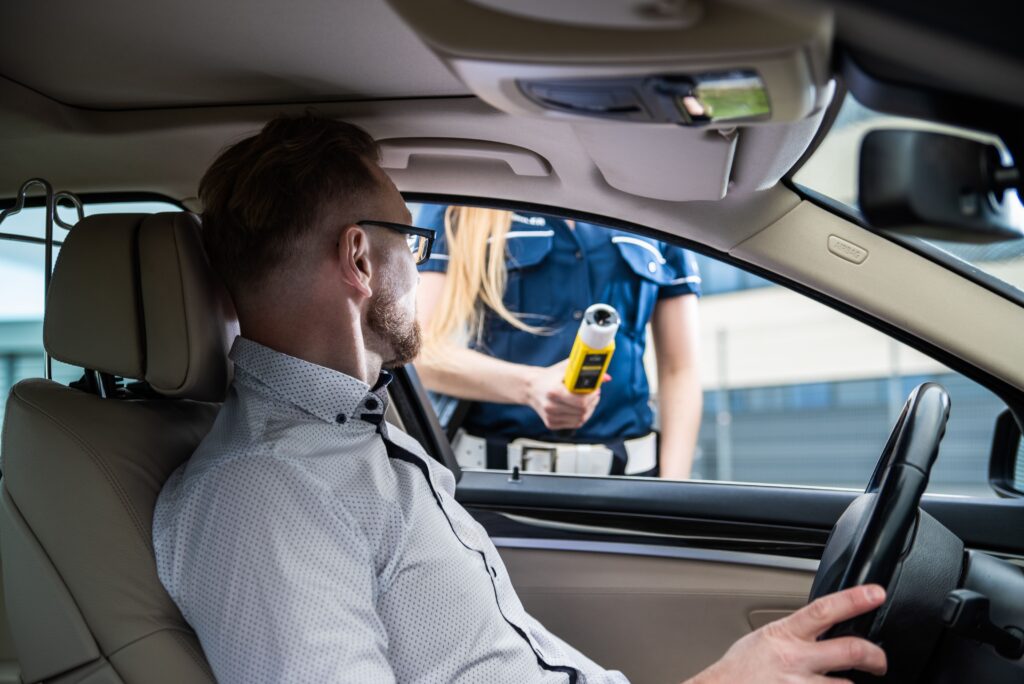
The “Legal Limit” Problem
The findings highlight a critical distinction: legal does not always mean safe.
Many drivers view 0.08% BAC as a bright line between safe and unsafe driving. However, impairment of judgment, reaction time, and driving performance can occur at considerably lower levels. The study notes that crash risk at a BAC of 0.07% is approximately twice that of a sober driver.
As a result, a breathalyzer reading of 0.06% could provide a false sense of security rather than encouraging safer choices.
Implications for Technology and Public Safety
The authors do not argue against smartphone breathalyzers. In fact, they see significant potential for these devices to support impaired-driving prevention. However, they recommend that breathalyzer applications provide more than just a numerical BAC reading.
Possible improvements include:
- Warning users that impairment begins below 0.08%
- Explaining increased crash risks at moderate BAC levels
- Offering ride-share options directly within the app
- Providing stronger safety messaging when alcohol is detected
Without such context, BAC feedback may unintentionally encourage some people to drive when they otherwise might not.
Key Takeaway
This study challenges the assumption that more information automatically leads to safer decisions. Researchers found that when moderately intoxicated individuals learned their BAC was below the legal limit, they felt more capable of driving and became more willing to do so.
For impaired-driving prevention professionals, the message is clear: the way information is presented matters. A BAC reading alone may not promote safer behavior. Effective technology must communicate not only whether someone is legally impaired, but also whether they are safely able to drive.
Source:
Ebert, J. P., Kranzler, H. R., Barnett, I. J., Hemmons, J. E., Yan, R., Spencer, E., & Delgado, M. K. (2025). Effect of smartphone breathalyzer feedback on willingness to drive in moderately intoxicated individuals: A randomized trial. Psychology of addictive behaviors : journal of the Society of Psychologists in Addictive Behaviors, 39(7), 669–675. https://doi.org/10.1037/adb0001088